← All Guides 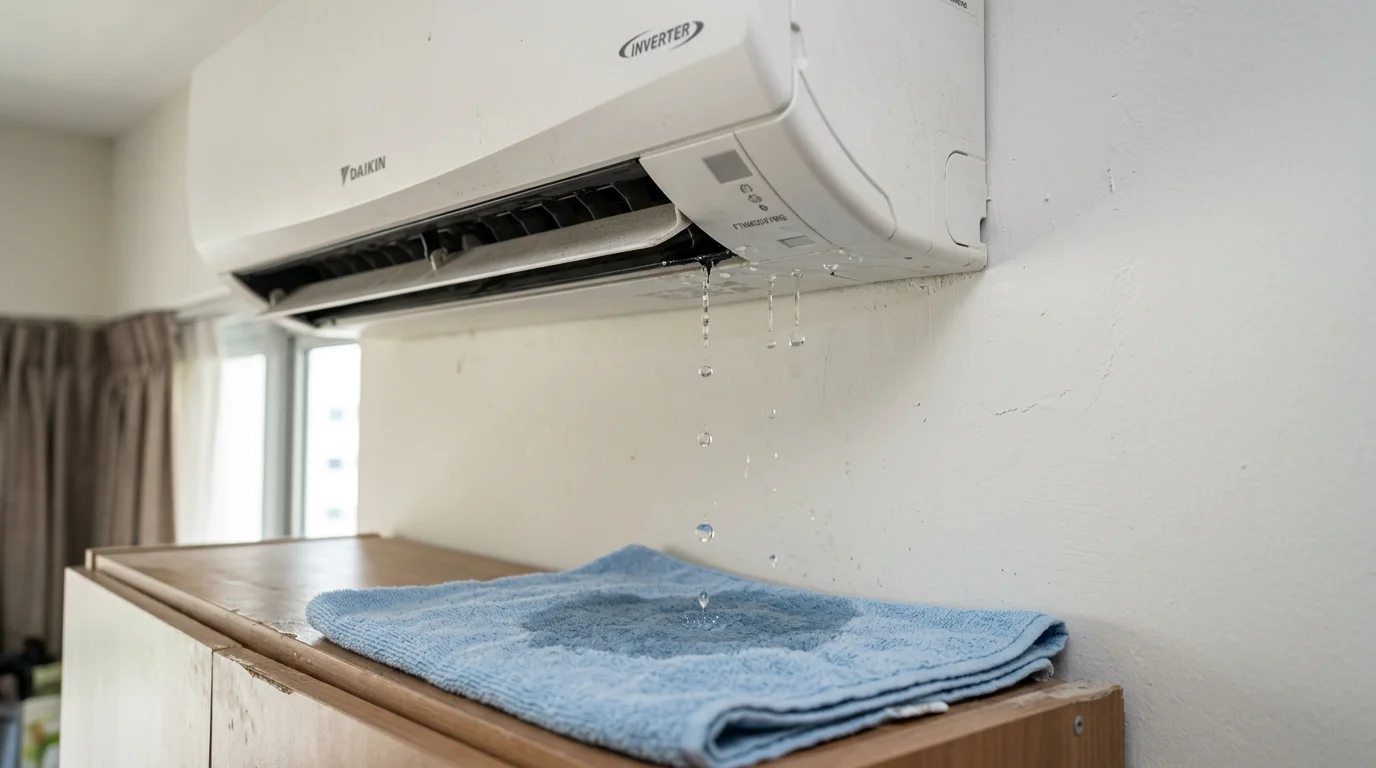
Aircon Leaking Water? Stop the Drip in Minutes
Water dripping from the indoor unit onto your floor or wall. Usually a blocked drain pipe -- here's how to check and clear it.
15 - 45 minutes
Difficulty: Easy to Medium Last updated: March 2026
What You Can Fix Yourself
Why Aircons Leak More in Singapore
Singapore's humidity (often 80-90%) means your aircon pulls a lot of moisture from the air. That water collects in a tray inside the unit and drains out through a pipe. When the pipe gets blocked -- and in this climate, it will -- water overflows and drips into your room.
This is easily the most common aircon service call in Singapore.
Clear the Drainage Pipe
The most common cause of leaking is a clogged drainage pipe. Algae, mould, and dirt build up inside the drain line over time.
**How to clear it:**
1. Locate the drainage pipe outlet (usually outside your unit, near the outdoor unit or at a lower point)
2. Use a wet/dry vacuum to suction from the outlet end
3. Alternatively, flush the pipe with a mixture of water and vinegar (1:1 ratio)
4. For stubborn clogs, use a thin flexible wire or pipe cleaner
If water flows freely after clearing, the leak should stop within minutes.
Clean or Replace the Air Filter
A severely dirty filter restricts airflow over the evaporator coil, causing it to freeze. When the ice melts, excess water overwhelms the drain tray and leaks out.
Clean your filters every 2-3 weeks. If filters are damaged or warped, replace them — they're inexpensive ($10-$20 per filter).
When to Call a Professional
Check the Drain Tray
The drain tray (also called the drip tray) sits under the evaporator coil and collects condensation. Over time, it can crack, rust, or become misaligned.
**Signs of drain tray issues:**
- Water dripping from the middle or sides of the unit (not from the drain pipe area)
- Visible cracks or rust on the tray
- Tray is tilted or shifted out of position
A cracked tray needs professional replacement.
Improper Installation
If your aircon was recently installed and is leaking, the unit may not be level or the drainage pipe may not have enough slope for gravity drainage.
The indoor unit should tilt very slightly towards the drain side. The drainage pipe needs a consistent downward slope (at least 1-2 degrees) along its entire length.
Contact the installer to rectify — this should be covered under installation warranty.
When to Call a Pro
If clearing the drainage pipe and cleaning filters doesn't stop the leak, or if you see cracks in the drain tray or water coming from unusual spots on the unit — call a technician. Persistent leaking can damage walls, ceilings, and furniture.
Browse contractor directory →Maintenance Tip
Flush your drainage pipe with vinegar solution every 2-3 months to prevent algae buildup. This simple step prevents most leaking issues.